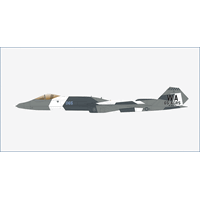
































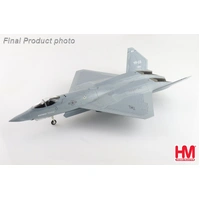
Hobby Master 1/72 YF-23 "Gray Ghost" PAV-2 AF Serial No.87-0801 1990 (with 3 xAIM-1202 xAIM-9) Diecast Metal Aircraft
$269.99
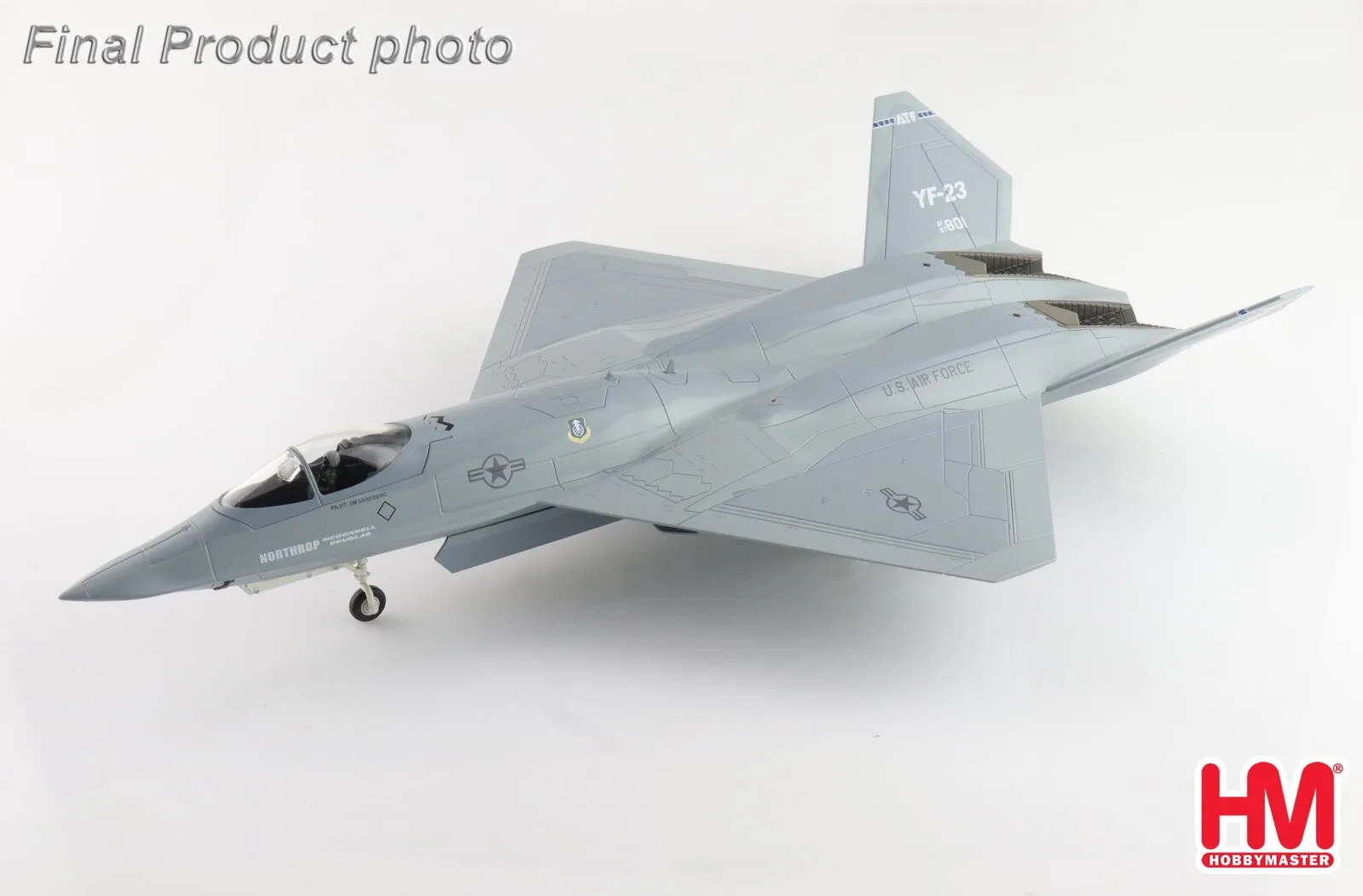

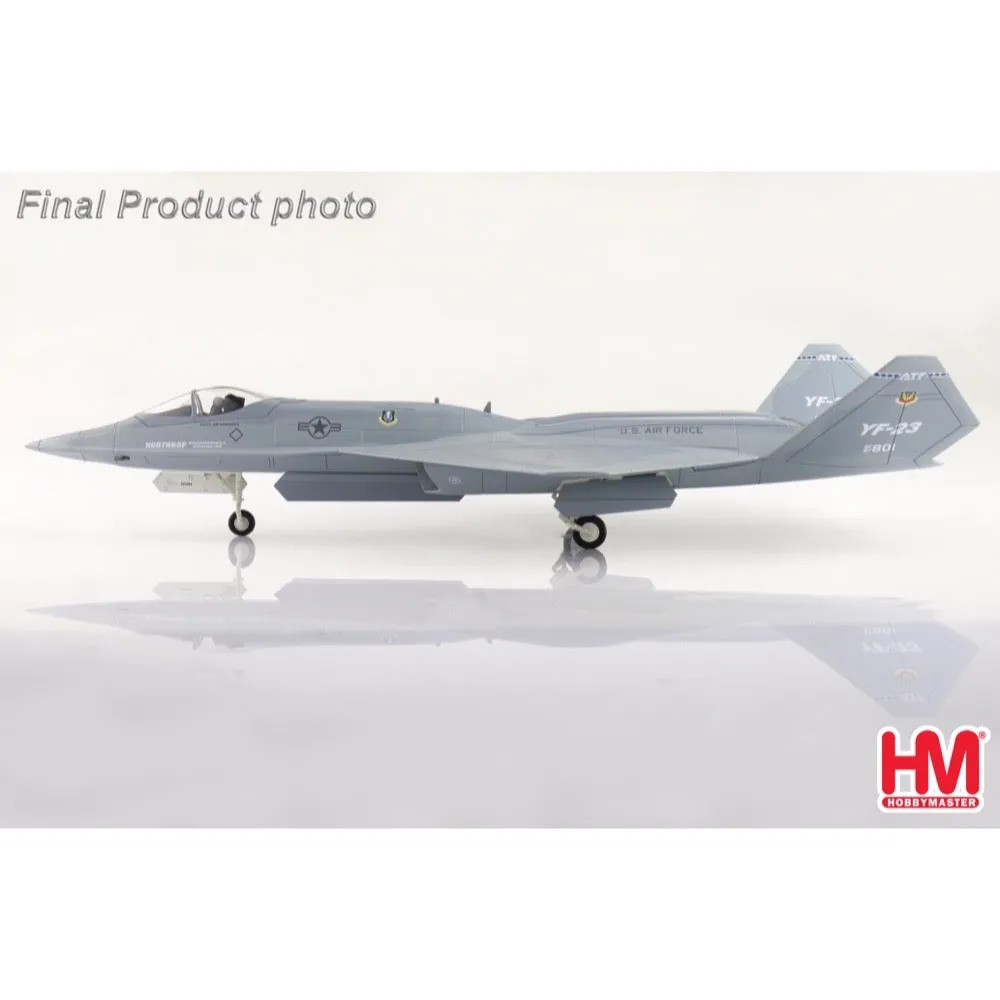
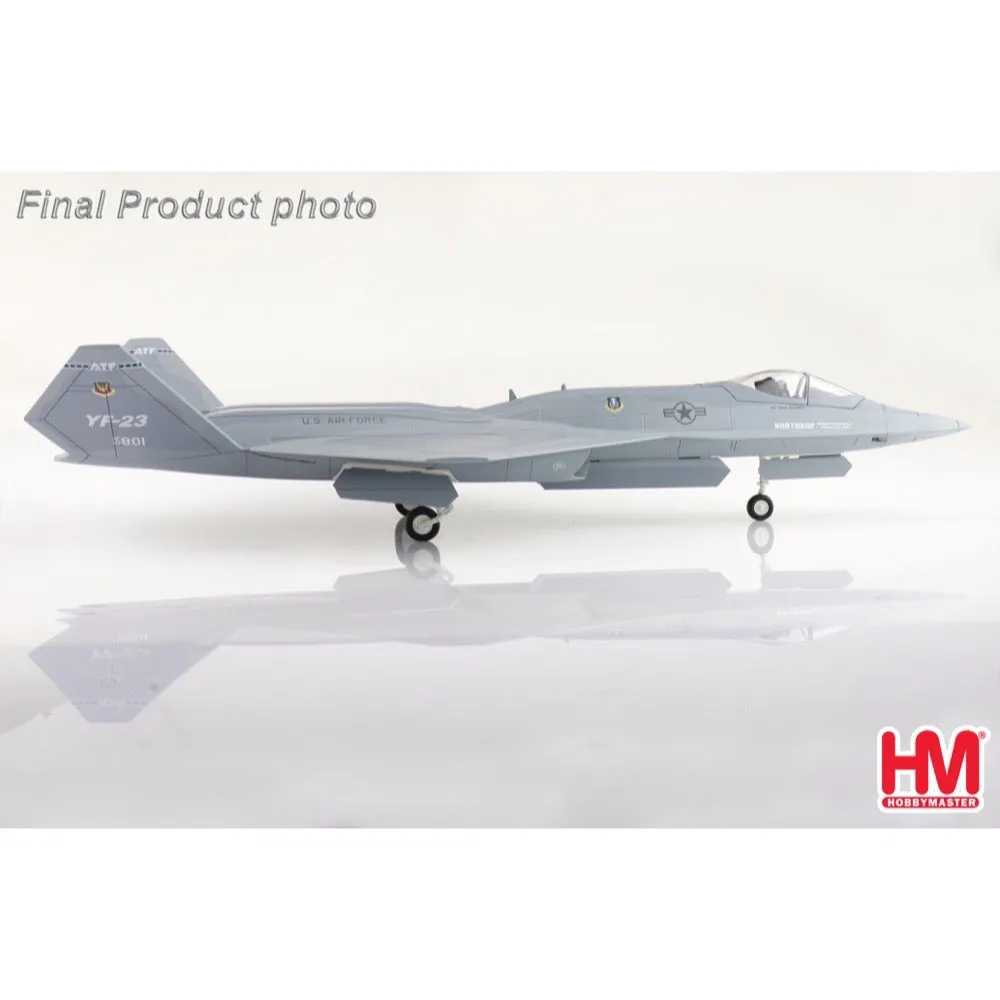
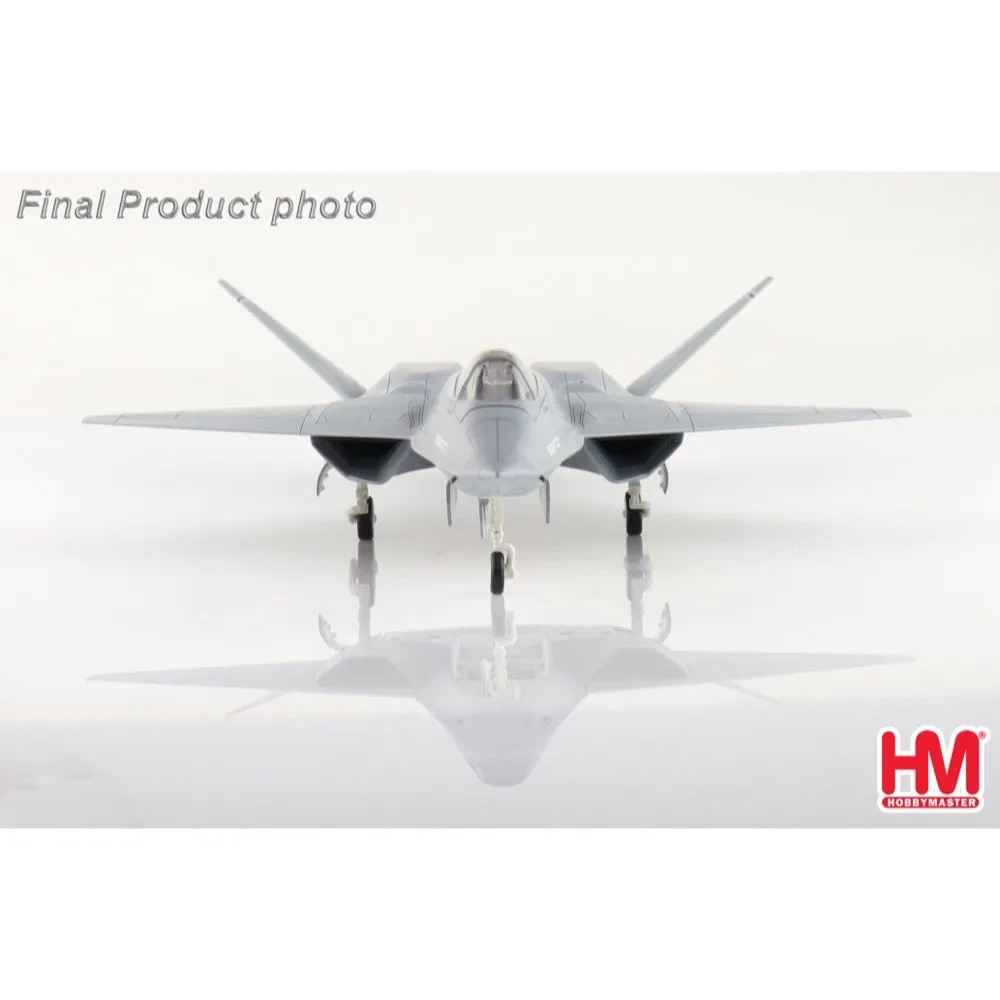
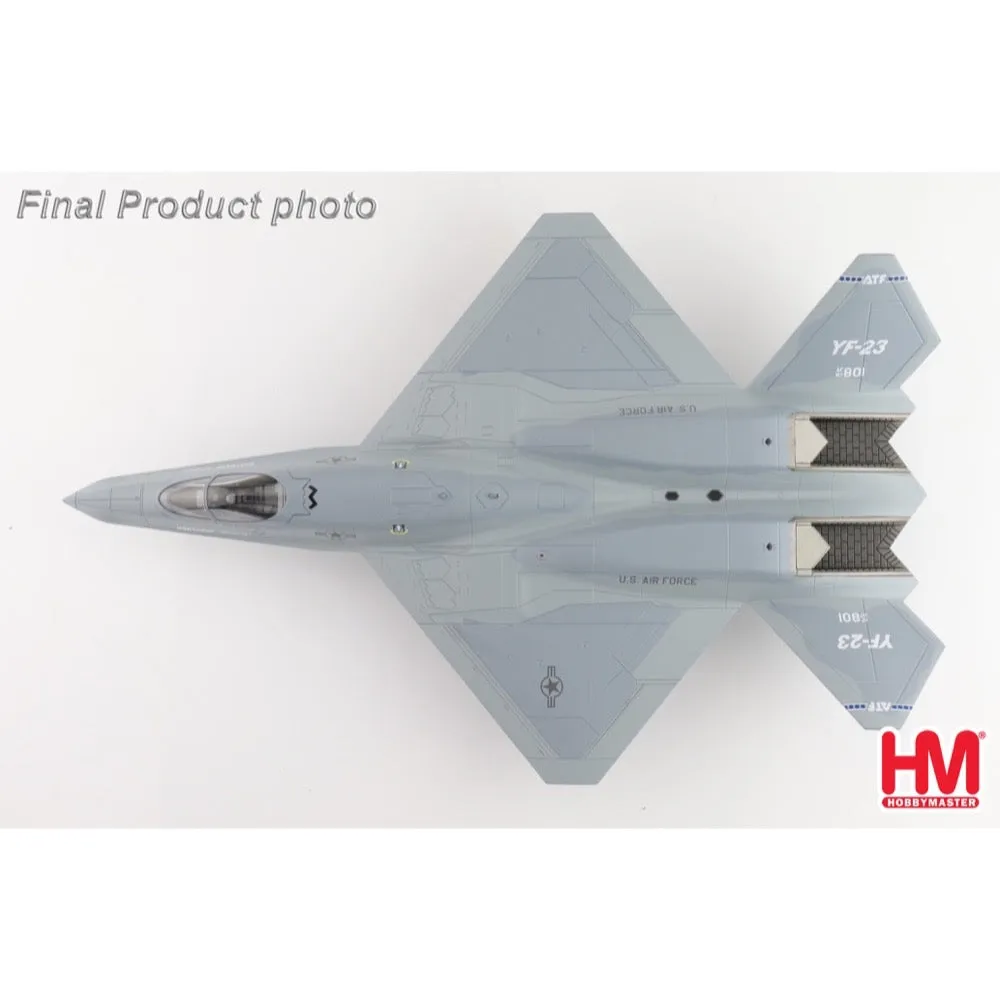
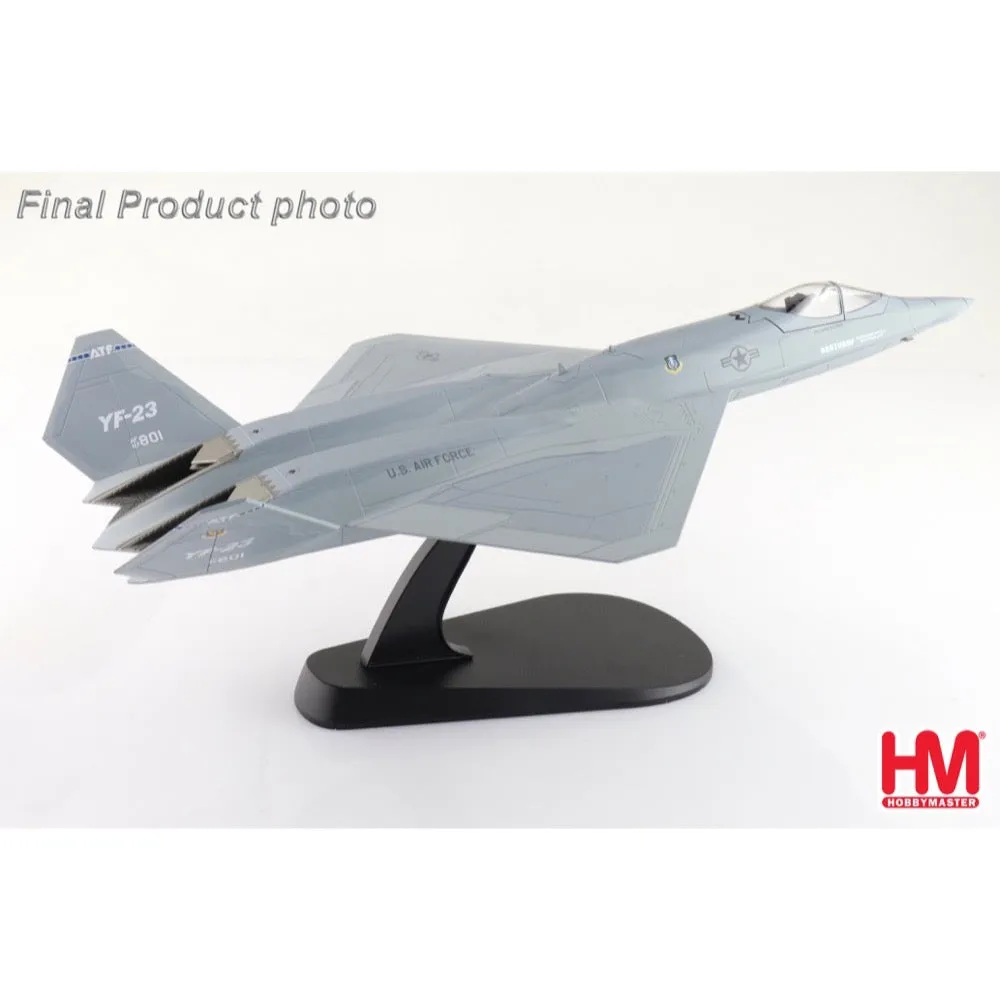
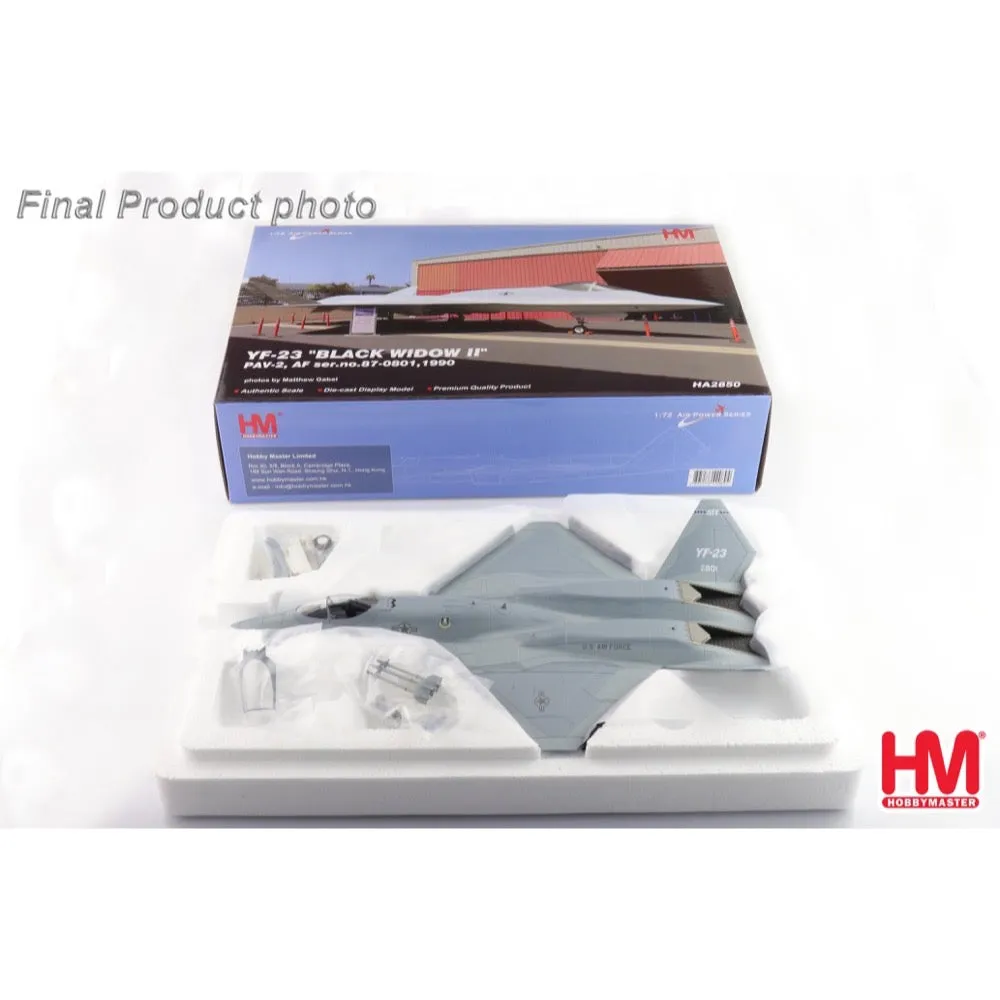
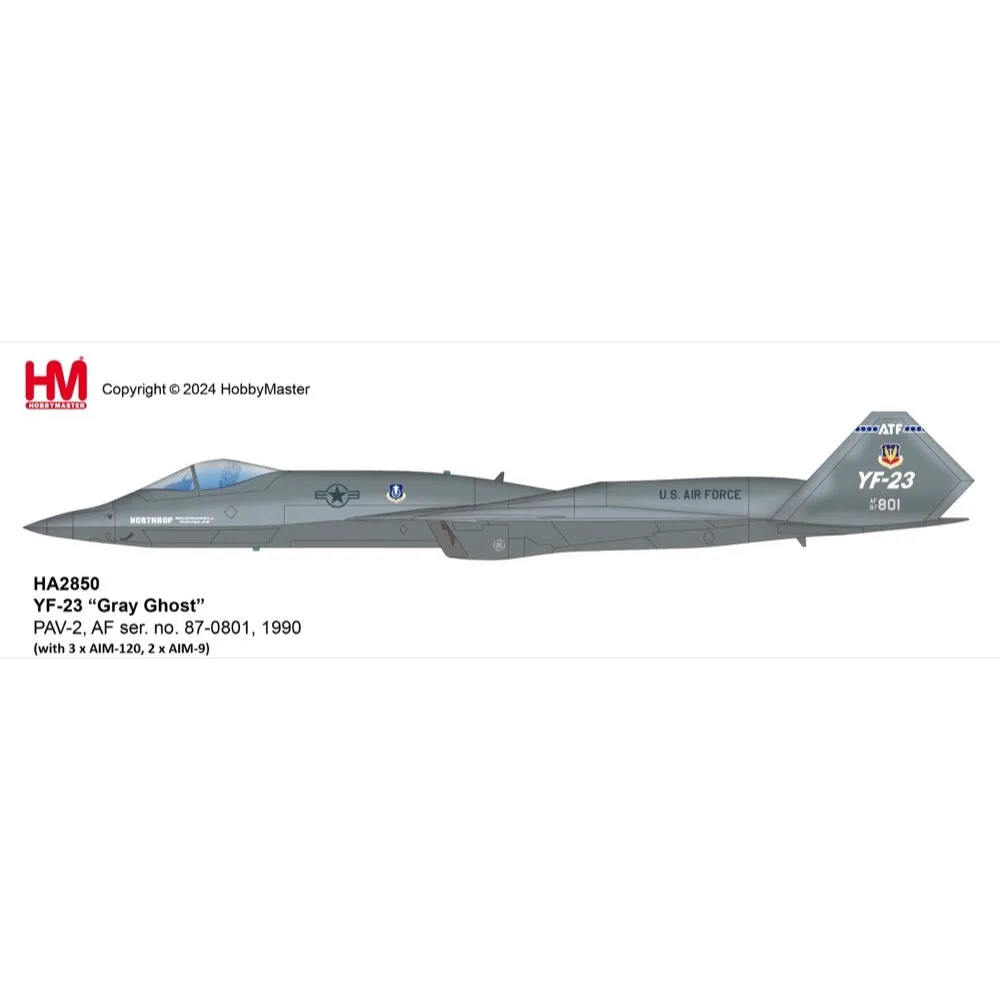
Hobby Master 1/72 YF-23 "Gray Ghost" PAV-2 AF Serial No.87-0801 1990 (with 3 xAIM-1202 xAIM-9) Diecast Metal Aircraft
SKU:
HA2850Availability:
Sold Out
Quantity:
 Flat Rate $9.95 Shipping To Metro Areas*
- Free Shipping For Orders Over $150 To Metro Areas* (Online orders only)
In the 1980s, the USAF sought a replacement for its F-15 fighter to address emerging threats like the Soviet Union's Su-27 and MiG-29, leading to design proposals from several companies.
Description
The Northrop/McDonnell Douglas YF-23 is an American single-seat, twin-engine, supersonic stealth fighter aircraft technology demonstrator designed for the United States Air Force (USAF). The design team was a finalist in the USAF's Advanced Tactical Fighter (ATF) demonstration/validation competition, battling the YF-22 team for full-scale development and production.
Two YF-23 prototypes were built. The second aircraft, #87-0801, was designated Prototype Air Vehicle 2 (PAV-2) and made its first flight on 26 October, 1990 using the callsign "Grey Ghost". This aircraft is currently on display at the Western Museum of Flight in Torrance, California.
Designed to meet a US Air Force requirement for an Advanced Tactical Fighter (ATF) to replace the F-15 Eagle, the YF-23 demonstrator was first flown on August 27th, 1990. The USAF's ATF program aimed to produce a fifth-generation air superiority fighter that would be better matched against emerging new aircraft such as the Su-27 Flanker. After a four-year development and evaluation process, the YF-22 team was selected in favor of the YF-23 in 1991. Although the YF-23 was stealthier and faster, it was less agile than its competitor.
Diecast metal construction with some plastic components.
Realistic panel lines, antennas, access panels and surface details.
Pad printed markings and placards that won't fade or peel like decals.
Accurately detailed underside with concealed screwheads.
In the 1980s, the USAF sought a replacement for its F-15 fighter to address emerging threats like the Soviet Union's Su-27 and MiG-29, leading to design proposals from several companies.
Northrop and McDonnell Douglas developed the YF-23, while Lockheed, Boeing, and General Dynamics created the YF-22.
Although the YF-23 was faster and stealthier, it lacked the agility of the YF-22.
After four years of evaluation, the YF-22 was chosen in 1991, resulting in the F-22 Raptor, which first flew in 1997 and entered service in 2005.
Plans for a naval version as an F-14 replacement were later canceled due to costs.
After flight testing, the YF-23 prototypes were put into storage and considered for further research projects that never materialized.
Today, the two YF-23 prototypes can be seen at the National Museum of the United States Air Force and the Western Museum of Flight.
Specifications - Crew: 1 - Length: 67 ft 5 in (20.55 m) - Wingspan: 43 ft 7 in (13.28 m) - Height: 13 ft 11 in (4.24 m) - Wing area: 950 sq ft (88 m2) - Weight - Empty: 29,000 lb (13,154 kg) contractor weight (without engines) - Maximum Take-Off: 64,000 lb (29,030 kg) takeoff, 51,320 lb (23,280 kg) combat weight - Powerplant : 2 × Pratt & Whitney YF119-PW-100N or General Electric YF120-GE-100N afterburning turbofans, 23,500 lbf (105 kN) thrust each (YF120) dry, 30,000 or - 35,000 lbf (130 or 160 kN) with afterburner - Performance - Maximum speed: Mach 2.2, 1,452 mph (1,262 kn; 2,337 km/h) at high altitude - Supercruise: Mach 1.72, 1,135 mph (986 kn; 1,827 km/h) at altitude - Range: 2,424 nmi (2,789 mi, 4,489 km) - Combat range: 700–800 nmi (810–920 mi, 1,300–1,500 km) - Service ceiling: 65,000 ft (19,800 m) - G limits: +7.1 g (highest tested) - Wing loading: 67.4 lb/sq ft (329 kg/m2) (54 lb/sq ft at combat weight) - Thrust/weight: 1.09 (1.36 at combat weight) - Armament - 4 × AIM-120 AMRAAM or AIM-7 Sparrow medium-range air-to-air missiles - 1 × 20 mm (0.79 in) M61 Vulcan cannon - 2 × AIM-9 Sidewinder short-range air-to-air missiles
Key Specifications
- Scale: 1/72
Full Specifications
| country | American |
| era | Modern |
| List | 436 |
| material | Diecast Metal |
| Theme | Air Military |
| type | Jet |
Specifications
| Brand | Hobby Master |