































Green Stuff World Moldable thermoplastic beads - White 100g
$12.99
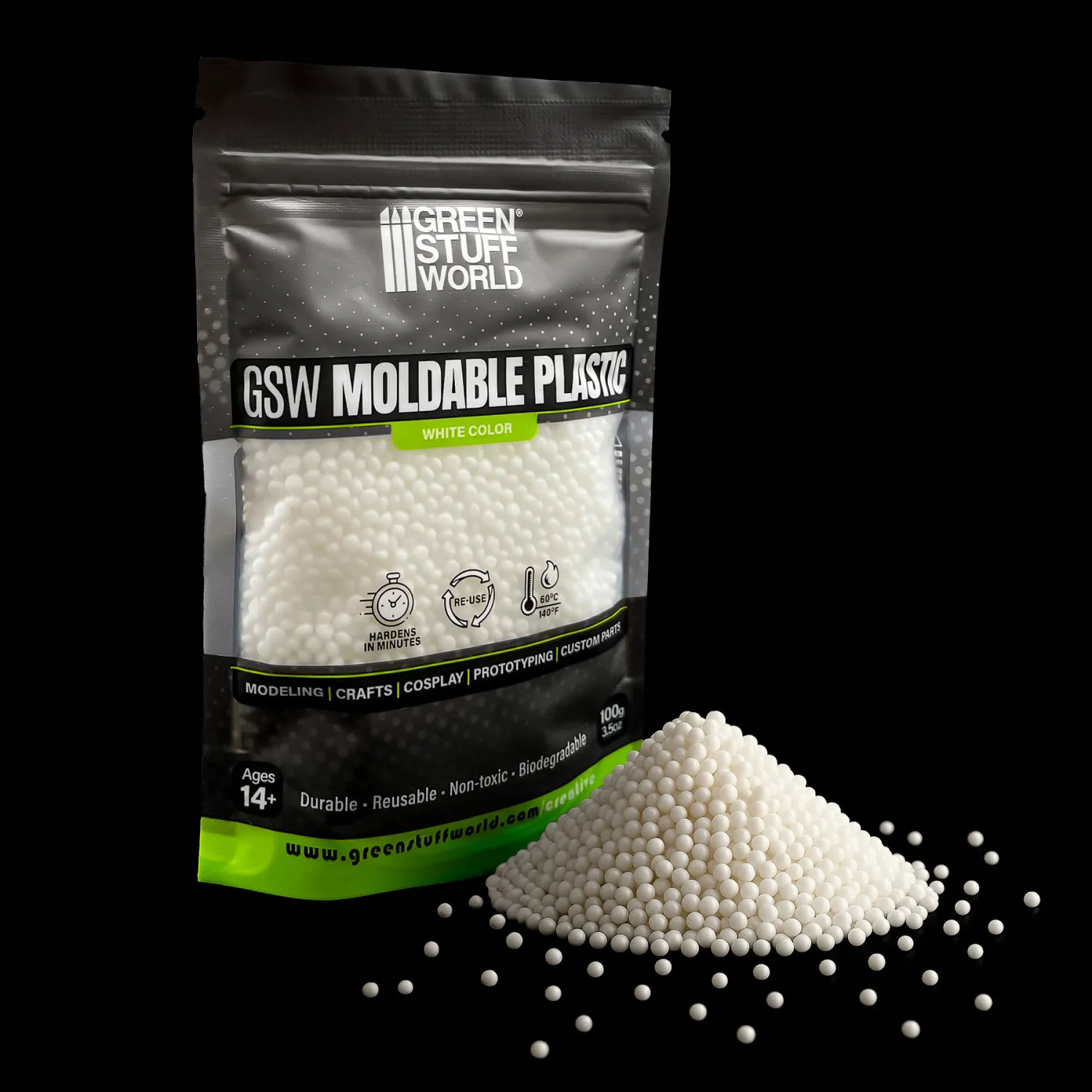
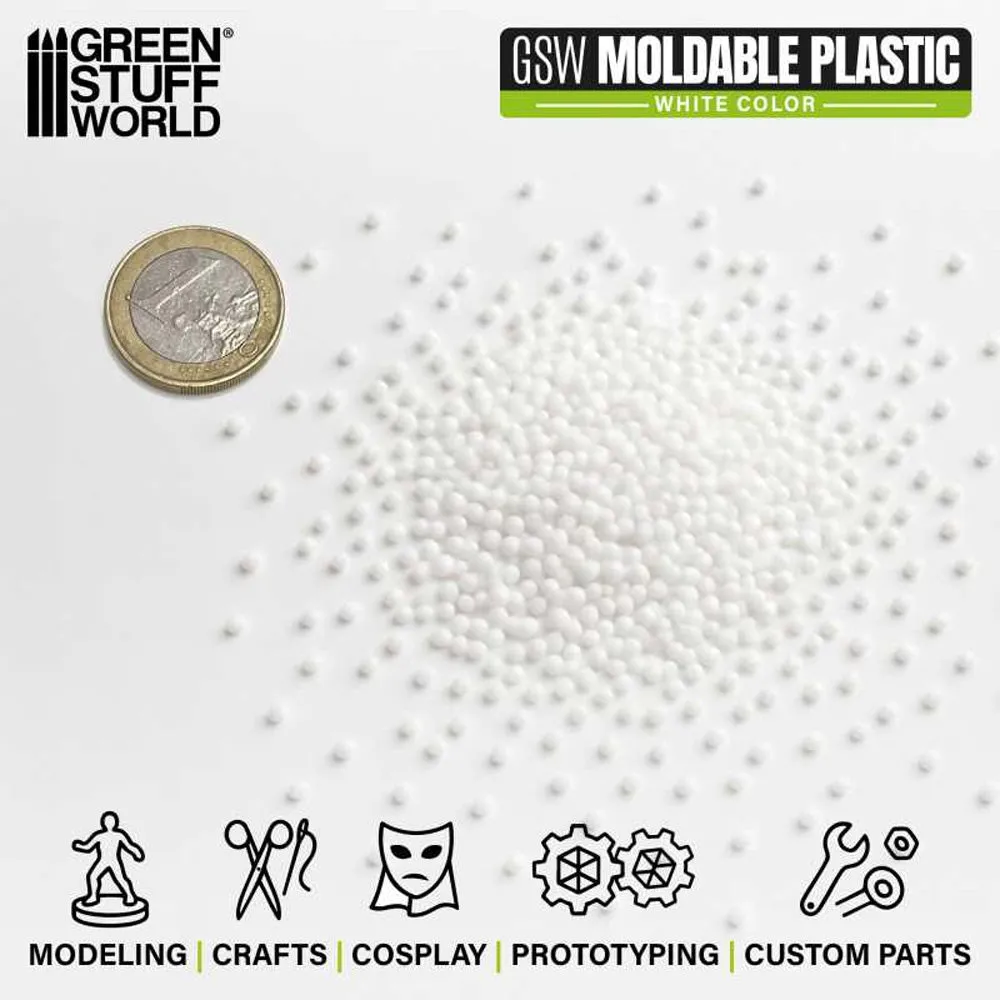
Green Stuff World Moldable thermoplastic beads - White 100g
SKU:
GSW-6330Availability:
In Stock - Broadmeadow
Quantity:
 Ships in 24 - 48 hours
- Flat Rate $9.95 Shipping To Metro Areas*
- Free Shipping For Orders Over $150 To Metro Areas* (Online orders only)
Description
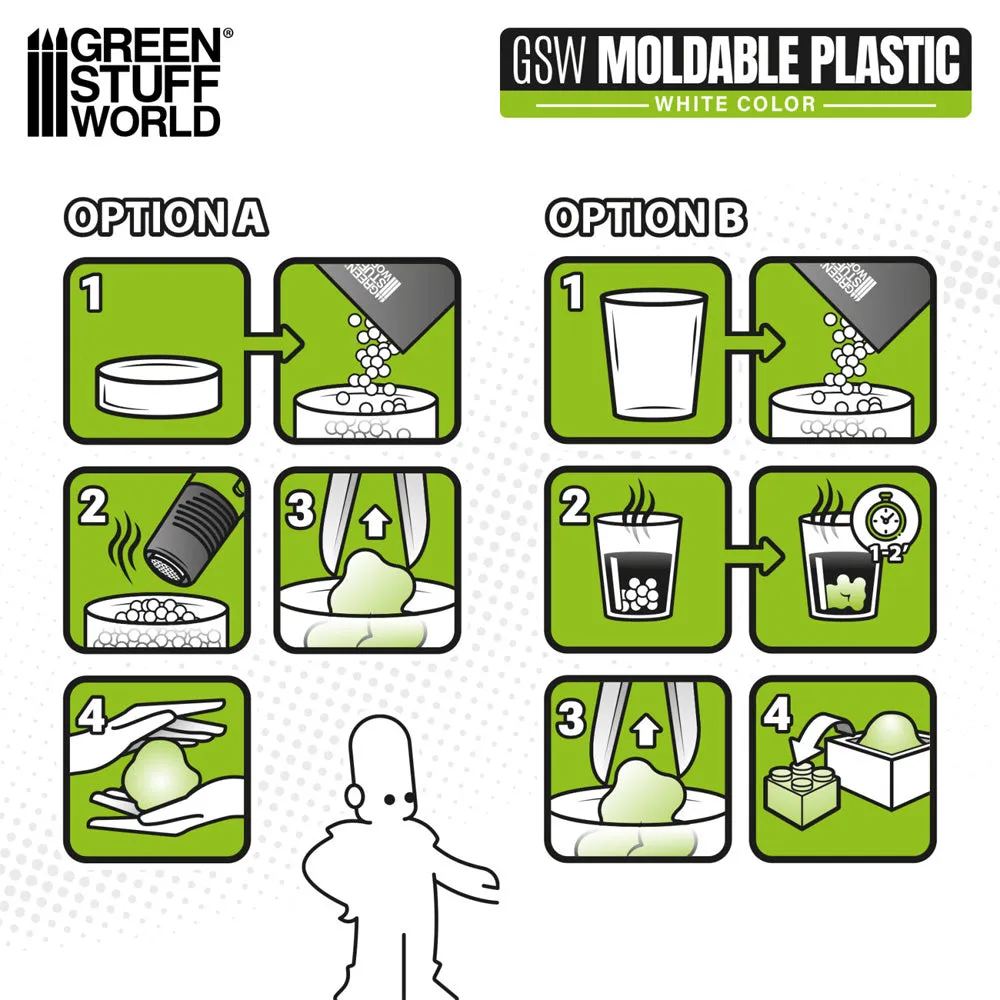
What are thermoplastic beads? Thermoplastic beads, sometimes called moldable plastic pellets or InstaMorph, are small granules made from a polymer that softens when heated and hardens when cooled, without undergoing chemical change. In essence, they behave like a reusable plastic clay: when warmed above a certain temperature, the reusable polymorphic beads become pliable and can be molded; when cooled back to ambient temperature, they solidify into a rigid shape. This reversible phase change is characteristic of thermoplastics in general. These thermoplastic pellets are composed of a polymeric plastic with a low melting point and are perfect for use in crafts, cosplay, small repairs, prototypes, and dental or theatrical effects (such as fangs) due to their ease of use, reusability, and ability to adopt fine details. This product cannot be painted very well, meaning that it practically repels all paints. You could paint pieces to use in a costume or cosplay prop, but keep in mind that the paint could scratch easily if those parts rub against something. It is best to paint it with airbrushing and always apply an acrylic primer to improve adhesion. One of the appealing features is that once cooled, they are stable and retain shape until reheated. This makes them ideal for repeated adjustments or remolding. How to melt thermoplastic beads? Melting thermoplastic beads is actually more like softening rather than a full melt: you bring them to a temperature where they become transparent and pliable, but you don’t drive them to a full liquid state (which might degrade the polymer). When softened, they blend together and can be worked easily. The most common method is as follows: Heat water or use a heat source — One safe and common method is to heat water (e.g., in a pot or heat-resistant container) to around 60–65 °C (140–150 °F). Immerse the beads — Place the reusable polymorphic pellets into the warm water. As they warm, they will become translucent, soften, and begin to stick together. You can then extract them (with tweezers or a spoon) before they fully separate into a liquid. Work quickly before cooling — Once pliable, the reusable polymorphic beads can be shaped using hands (wearing heat-resistant gloves), sculpting tools, molds, or even pressed against a surface or object to form details. Because the working window is finite (they will begin cooling), plan your shape ahead. Cool to solidify — After shaping, allow the piece to cool (ambient air or room temperature) until it is opaque white again. The cooling phase locks the shape in. At that point, the plastic is rigid and stable again. Reheating for adjustments — If you want to re-adjust, reheat the piece in warm water or with a gentle heat gun until pliable again, and then reshape. Some users also use a hot air gun for small pieces, but applying direct heat requires more care to avoid overheating or charring. Always work with incremental heating and monitor the clarity of the plastic pell
Specifications
| Brand | Green Stuff World |
Others also bought
![Citadel Shade: Nuln Oil(18Ml) [24-14]](/assets/thumb/99189953048.png?20220703123826)