





























Airfix 1/72 Mikoyan-Gurevich MiG-17F 'Fresco' Plastic Model Kit
$33.99
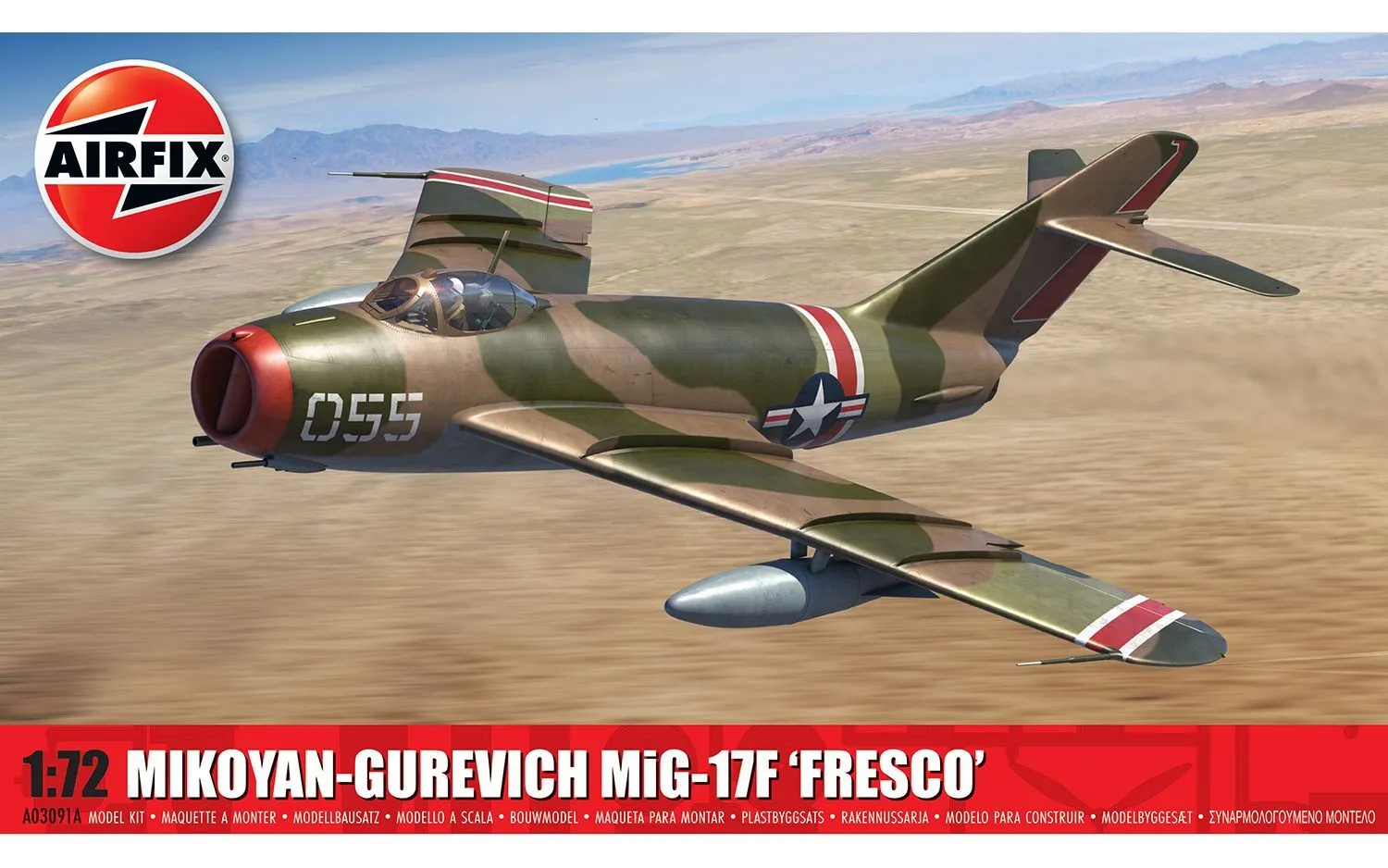
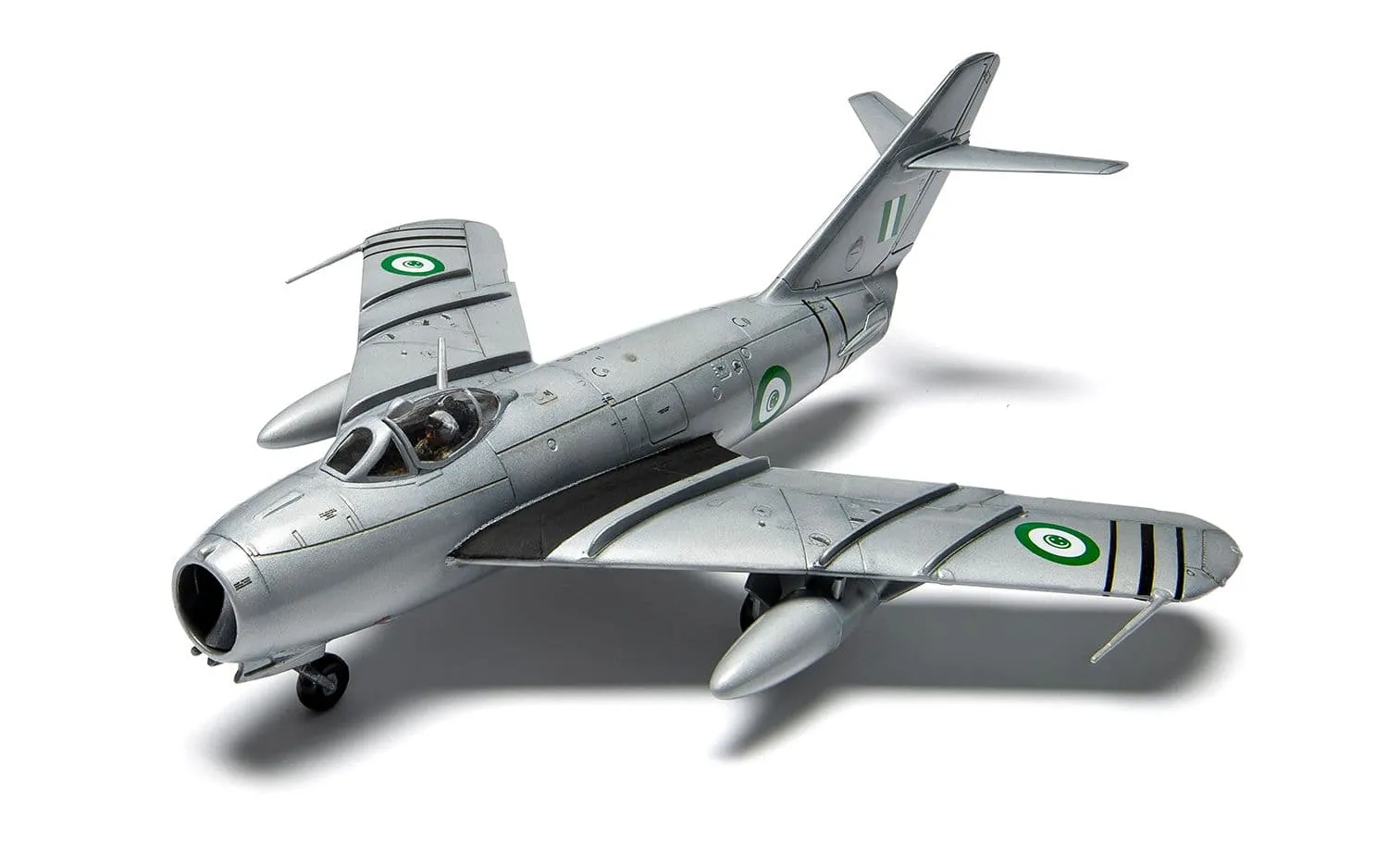
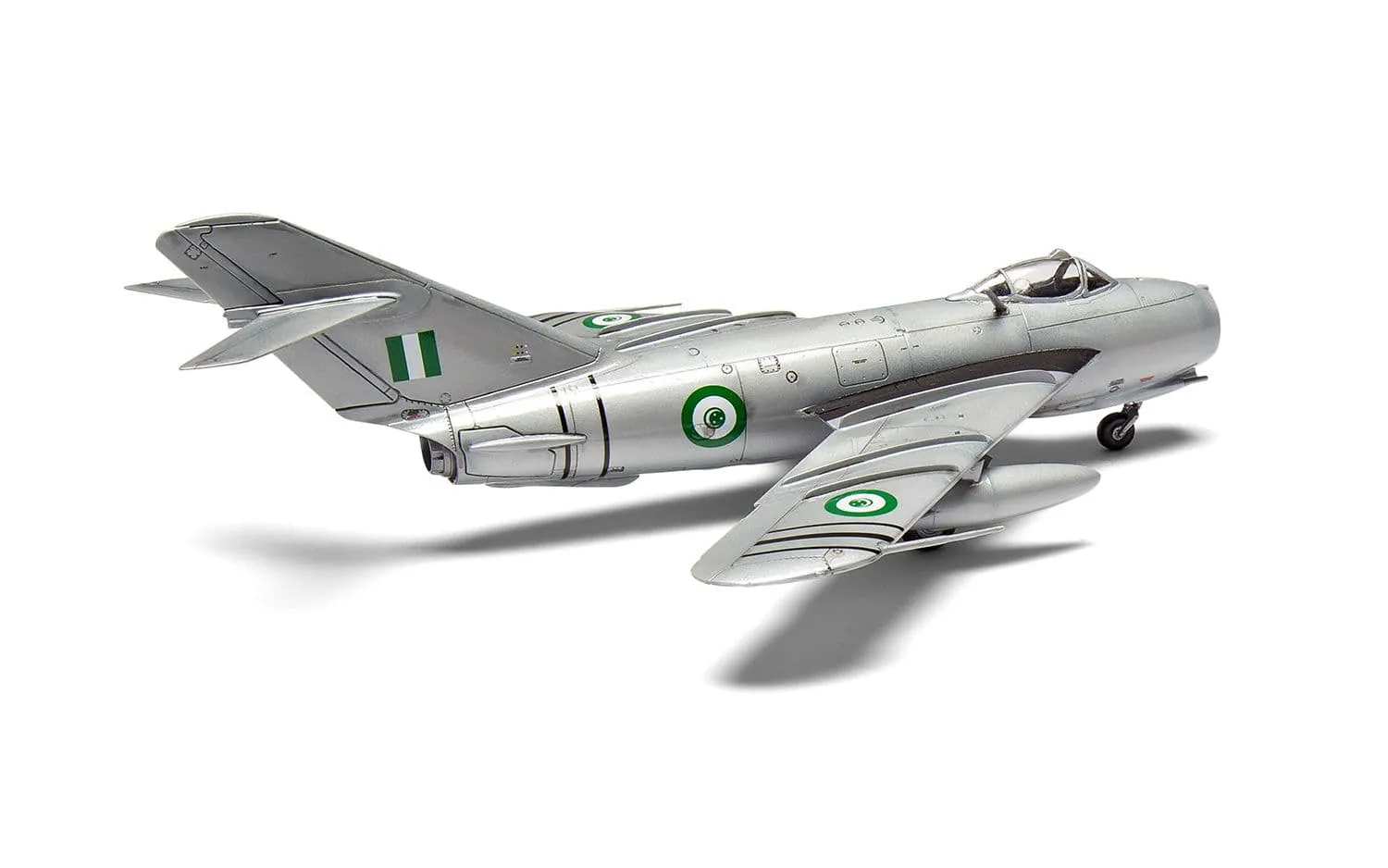
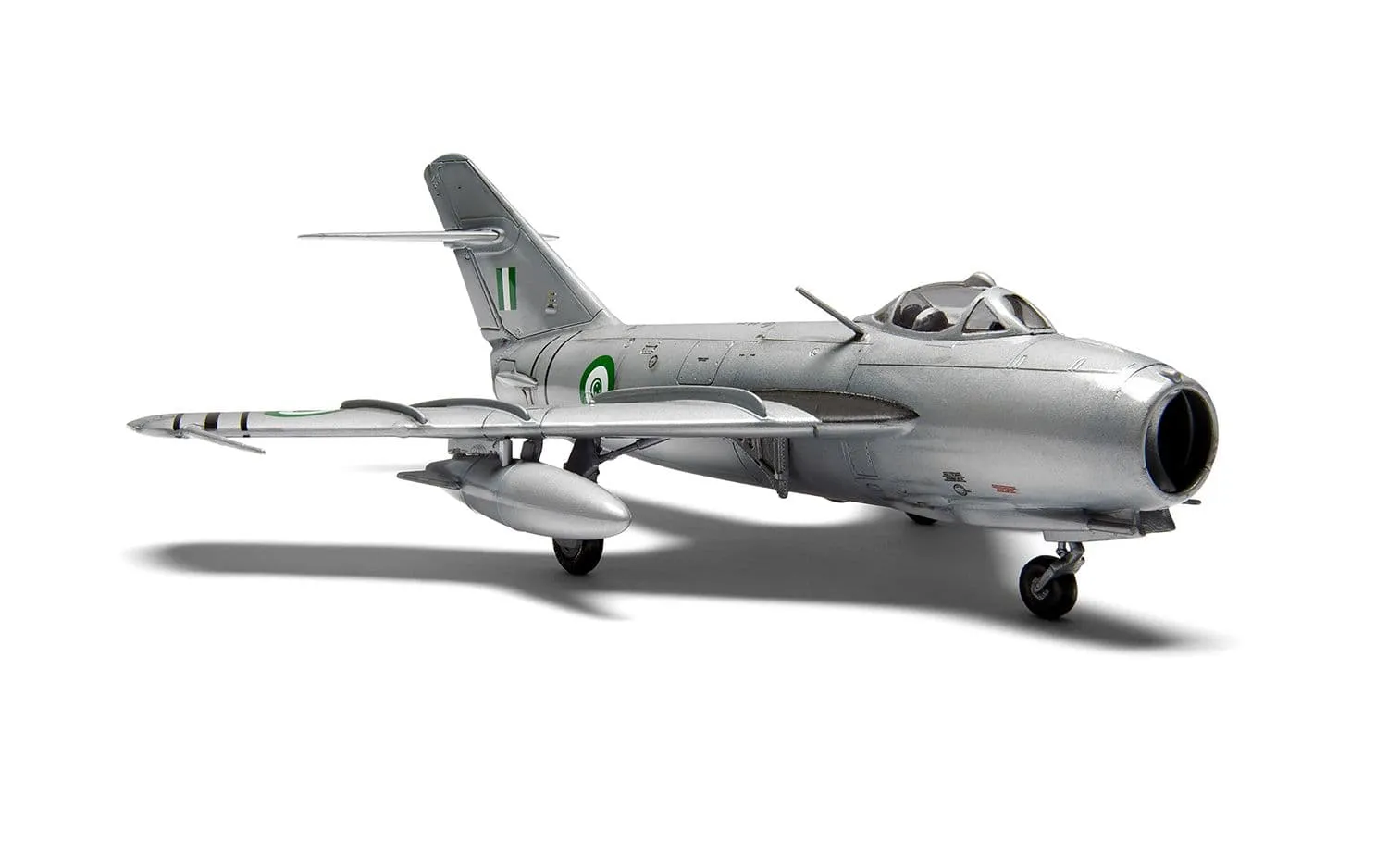
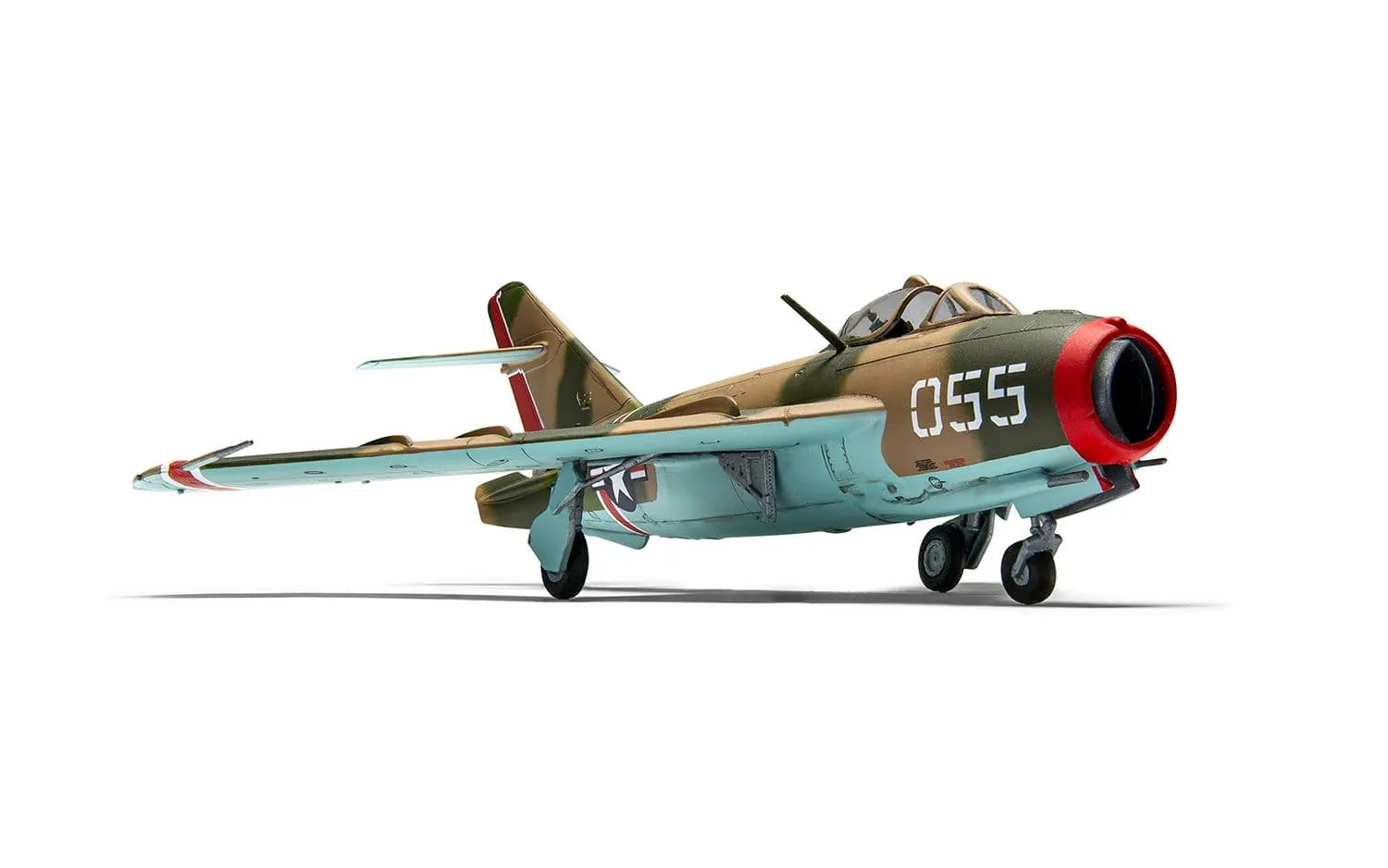
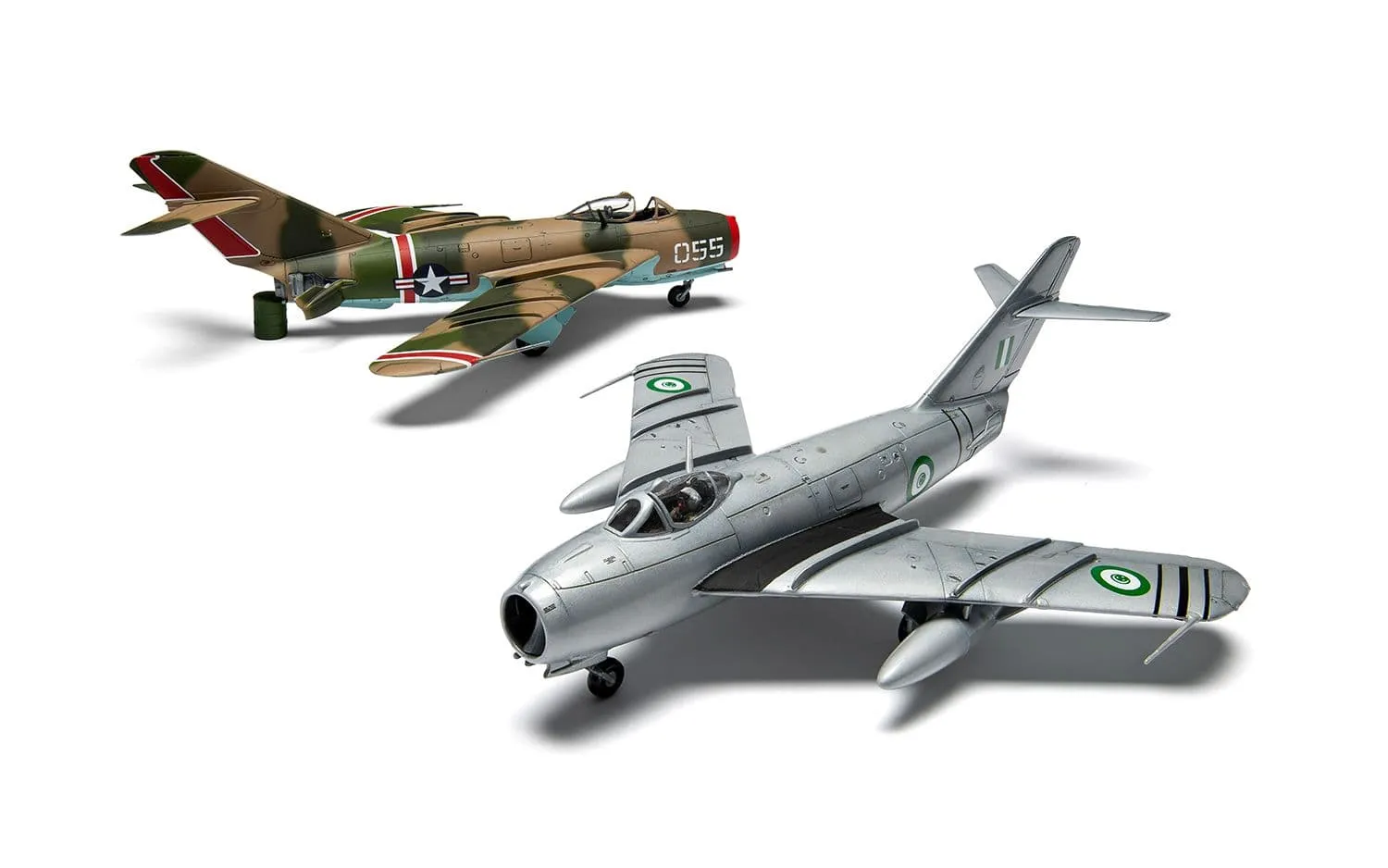
Airfix 1/72 Mikoyan-Gurevich MiG-17F 'Fresco' Plastic Model Kit
SKU:
AIR-03091AAvailability:
In Stock
Quantity:
 Ships in 24 - 48 hours
- Flat Rate $9.95 Shipping To Metro Areas*
- Free Shipping For Orders Over $150 To Metro Areas* (Online orders only)
This detailed 1:72 scale model kit of the Mikoyan-Gurevich MiG-17F 'Fresco' includes 87 parts and.
Description
The end of the Second World War saw victorious Allied nations desperately attempting to secure details of German jet technology and high-speed research data which could be applied to their own jet projects. The Soviet Union used information and engine technology obtained from Britain to introduce the diminutive Mikoyan-Gurevich MiG-15 in 1949 - one of the most capable of the early jet fighters.
Even as this aircraft proved effective during the Korean War, the Soviets were already working on its successor. The larger and faster Mig-17 Fresco may have looked like a larger incarnation of its predecessor, yet this was a completely redesigned aircraft, incorporating many improvements over the MiG-15 and a significant upgrade in Soviet jet capability.
The MiG-17 was designed to perform the role of bomber killer and was never intended as a dogfighter. However, its exceptional agility would allow this aircraft to score combat victories over much heavier and more modern American designs.
The Vietnam War was a sobering experience for the US Air Force, as some of their modern aircraft fell victim to the guns of the MiG-17. Lighter and much more manoeuvrable than the US aircraft, the subsonic MiG-17 claimed victories over aircraft like the F-105 Thunderchief and McDonnell Douglas Phantom, resulting in the US developing new agile air superiority fighters.
Possessing excellent performance, and being cost-effective and easy to maintain, the rugged MiG-17 was produced in large numbers. It became the standard Warsaw Pact fighter from the mid-1950s and for the next decade, with aircraft produced under licence in both China and Poland.
It was an attractive fighter option for many of the world's smaller air forces and more than thirty overseas nations eventually operated the type. Perversely, for a nation against which the MiG-17 was designed to combat, America became home to significant numbers of these aircraft, most coming into the hands of private collectors but a small number used in dissimilar aircraft trials and to perfect combat techniques against smaller, more agile jet fighters. Two beautifully restored examples have also been popular display performers on the US Airshow circuit over the years.
This detailed 1:72 scale model kit of the Mikoyan-Gurevich MiG-17F 'Fresco' includes 87 parts and. With a wingspan measuring 134mm and a Skill Level 2 classification, this plastic kit provides a rewarding building experience and comes with options for two different paint schemes. As the larger and faster successor to the renowned MiG-15, the MiG-17 signifies a major advancement in Soviet jet technology, featuring a completely overhauled airframe with numerous enhancements over its forerunner.
Key Features
- 1:72 scale plastic model kit
- 87 parts for a rewarding building experience
- Skill Level 2 - suitable for budding modellers aged 8+
- Wingspan of 134mm
- Two genuine paint schemes included
- Cold War era Soviet fighter aircraft
History
Following the conclusion of the Second World War, the victorious Allied powers were eager to obtain German jet technology and high-speed research data to advance their own jet programmes. The Soviet Union utilised information and engine technology acquired from Britain to launch the compact Mikoyan-Gurevich MiG-15 in 1949, which became one of the most proficient early jet fighters.
While this aircraft demonstrated its effectiveness during the Korean War, the Soviets were already developing its replacement. The larger and quicker MiG-17 Fresco, although resembling an enlarged version of its predecessor, was a completely redesigned aircraft, integrating numerous enhancements over the MiG-15 and marking a significant leap in Soviet jet capabilities.
The MiG-17 was crafted to serve as a bomber interceptor and was not originally intended for dogfighting. Nevertheless, its remarkable manoeuvrability enabled it to achieve combat successes against much heavier and more advanced American aircraft.
The Vietnam War was a challenging period for the US Air Force, as some of their contemporary aircraft were outmatched by the MiG-17's weaponry. Being lighter and significantly more agile than American aircraft, the subsonic MiG-17 achieved victories over planes such as the F-105 Thunderchief and McDonnell Douglas Phantom, prompting the US to develop new agile air superiority fighters.
With outstanding performance, cost-effectiveness, and ease of maintenance, the durable MiG-17 was produced in vast numbers. It became the standard fighter for the Warsaw Pact from the mid-1950s for the following decade, with production under licence in both China and Poland.
It was an appealing fighter choice for numerous smaller air forces worldwide, with over thirty foreign nations eventually operating the type. Ironically, for a country the MiG-17 was designed to oppose, the United States became home to many of these aircraft, mostly acquired by private collectors, but a few were used in dissimilar aircraft trials and to refine combat techniques against smaller, more nimble jet fighters. Two beautifully restored examples have also been popular display performers on the US Airshow circuit over the years.
Key Specifications
- Finish: Plastic
- Skill Level: 2
Full Specifications
| Item Length - Without Packaging (cm) | 15.6 |
| Item Height - Without Packaging (cm) | 5.29 |
| Item Width - Without Packaging (cm) | 134 |
| Item Scale | 1:72 Scale |
| Contents (what's in the box) sets | Plastic kit, instruction sheet, paint guide and decal sheet. |
| Number of Scheme options | 2 |
| Flying Hours | 1 |
| Wingspan (mm) | 134 |
Specifications
| Brand | Airfix |
![I Love Kit 1/48 Gloster Gladiator MK1 Plastic Model Kit [64803]](/assets/thumb/ILK64803.webp?20260329175917)
![Academy 1/144 CH-47D/F/J/HC.Mk.1 "4 Nations" Plastic Model Kit *Aus Decals* [12624]](/assets/thumb/ACA-12624.webp?20260325232842)
![Academy 1/48 P-38F Lighting Glacier Girl Lockheed Plastic Model Kit [12208]](/assets/thumb/ACA-12208.webp?20260325232544)